
Temperature Sensors – Prominent Teknologies
Explore different types of industrial temperature sensors, their specifications, advantages, and applications.
Temperature Sensors – Types, Specifications & Applications
Temperature measurement plays a critical role in industrial automation and process control. From chemical processing and power plants to food manufacturing and pharmaceuticals, accurate temperature monitoring ensures product quality, operational safety, and energy efficiency.
At Prominent Teknologies, we provide a complete range of industrial temperature sensors designed for demanding process applications. Our solutions offer high accuracy, durability, and long-term reliability across a wide temperature range.
What is a Temperature Sensor?
A temperature sensor is a device that detects temperature and converts it into an electrical signal that can be displayed, recorded, or transmitted to controllers such as PLCs, DCS, SCADA, or indicators.
Industrial temperature sensors help maintain process consistency, protect equipment, optimize energy consumption, and improve production efficiency.
Types of Temperature Sensors
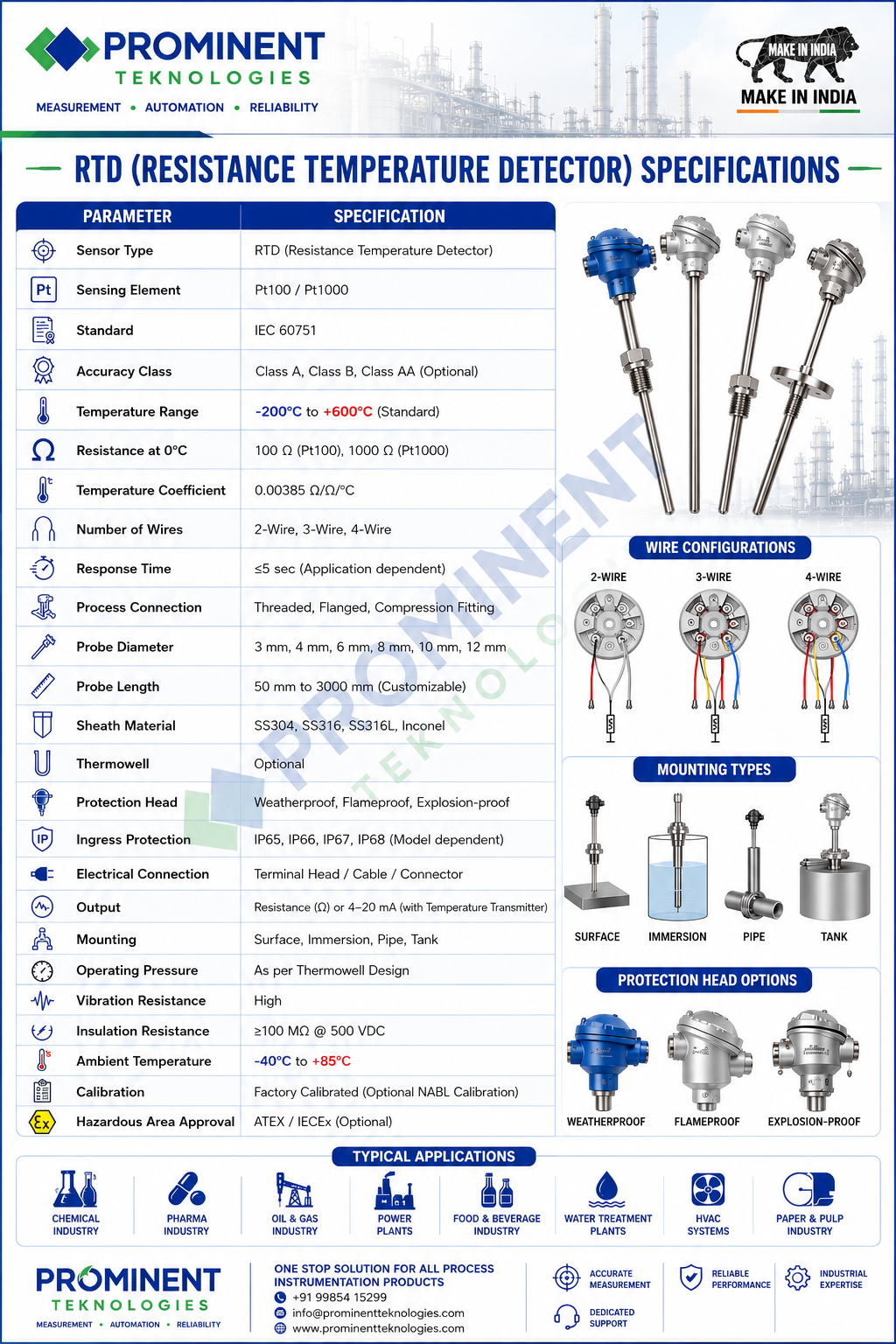
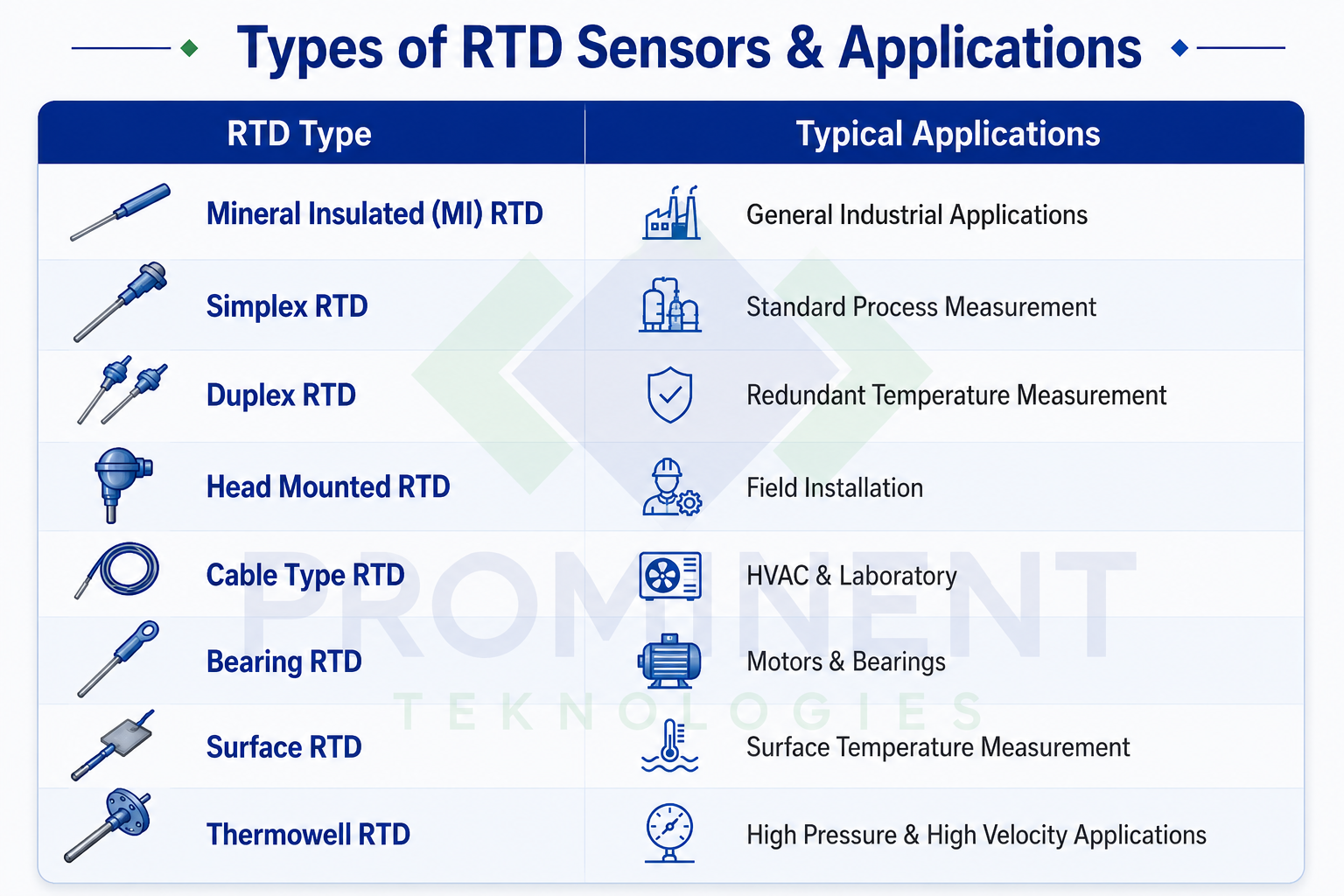
1. RTD ( Resistance Temperature Detector)
RTDs measure temperature by monitoring the change in electrical resistance of platinum elements.
Features :-
1. High measurement accuracy
2. Excellent repeatability
3. Long-term stability
4. Suitable for precision applications
5. Available in Pt100 and Pt1000 elements
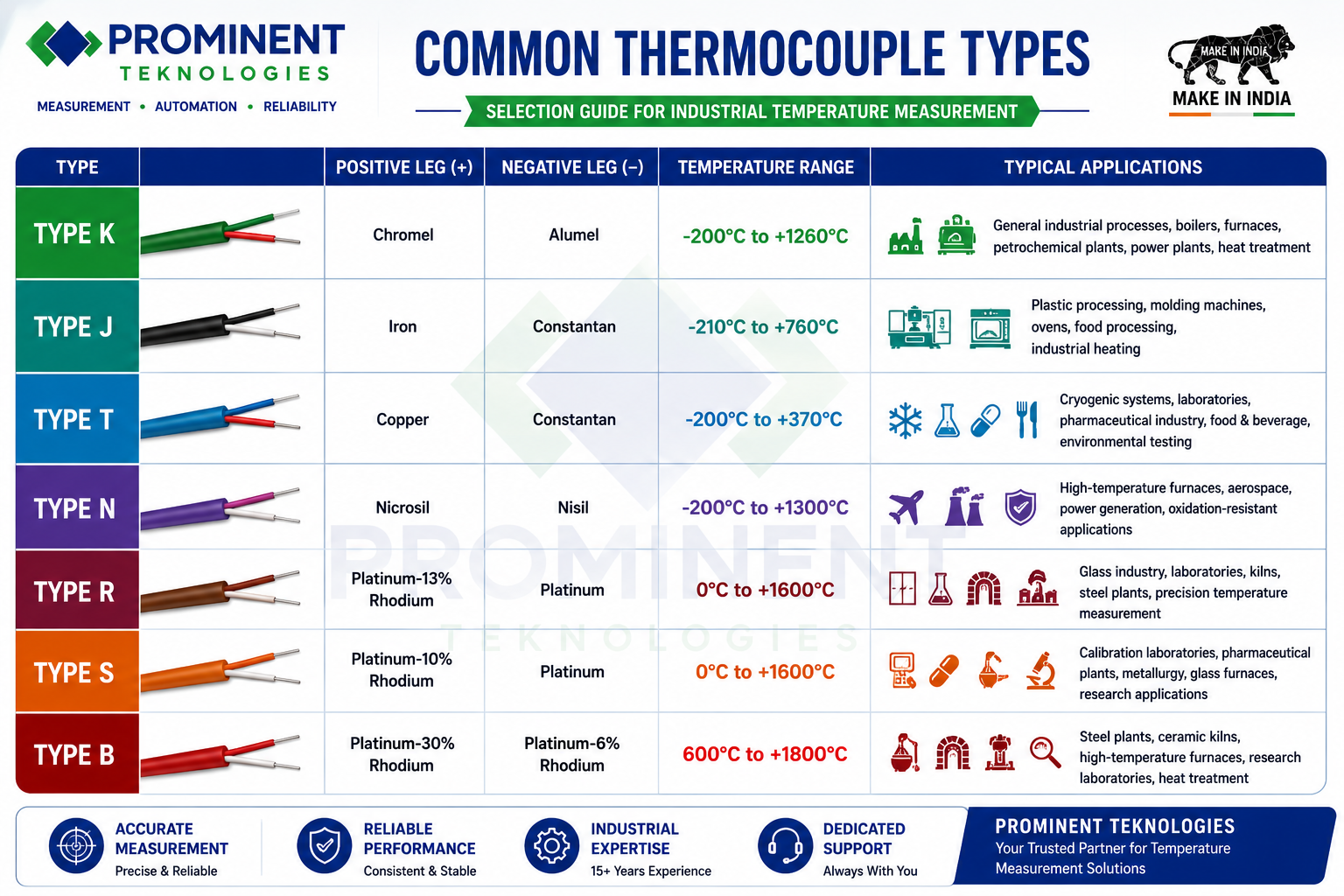
2. Thermocouple Sensors
Thermocouples generate a small voltage when two dissimilar metals are joined together and exposed to temperature differences.
Features RTDs measure temperature by monitoring the change in electrical resistance of platinum elements.
Features :-
1. Wide temperature range
2. Fast response time
3. Rugged construction
4. Suitable for harsh environments
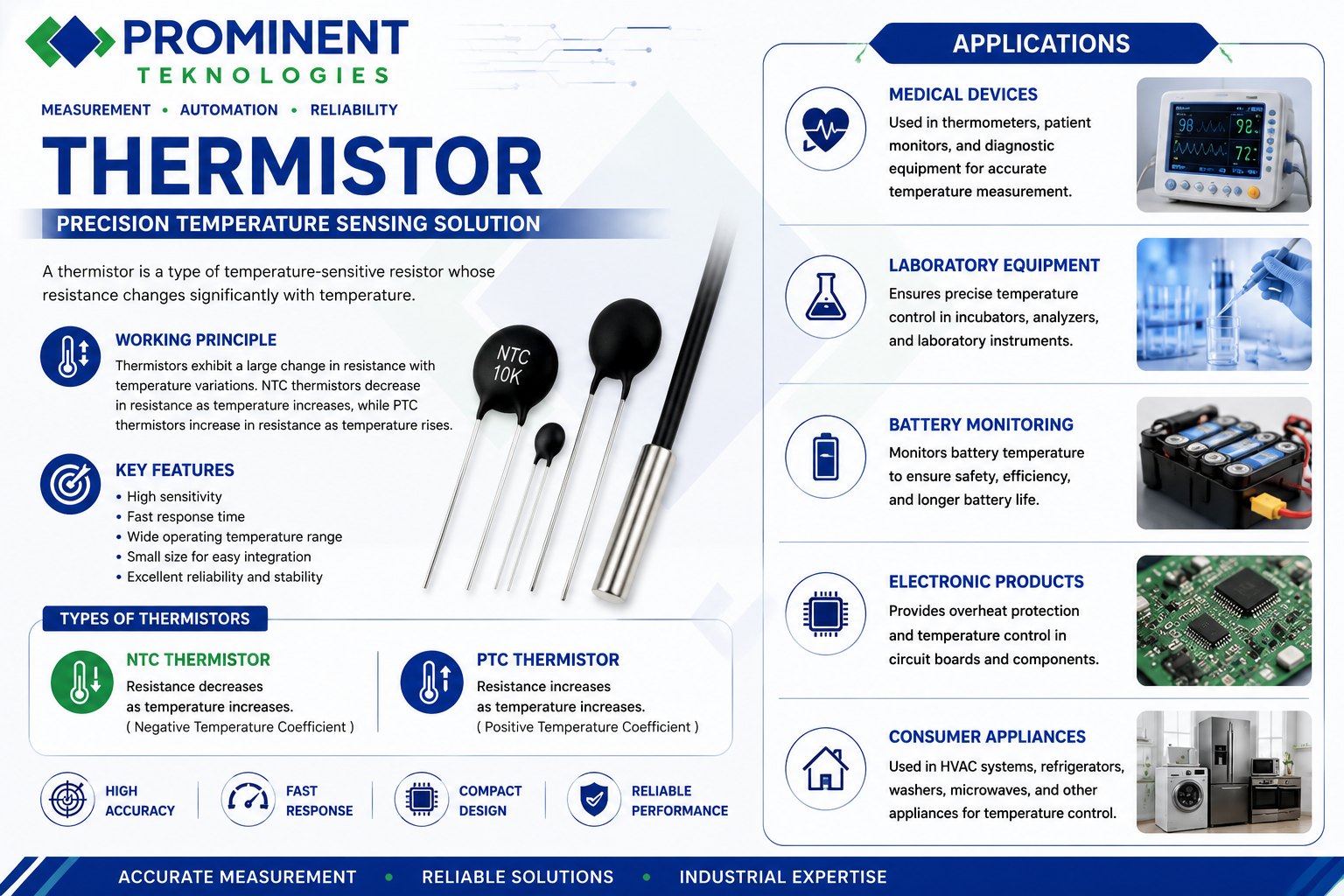
3. Thermistor
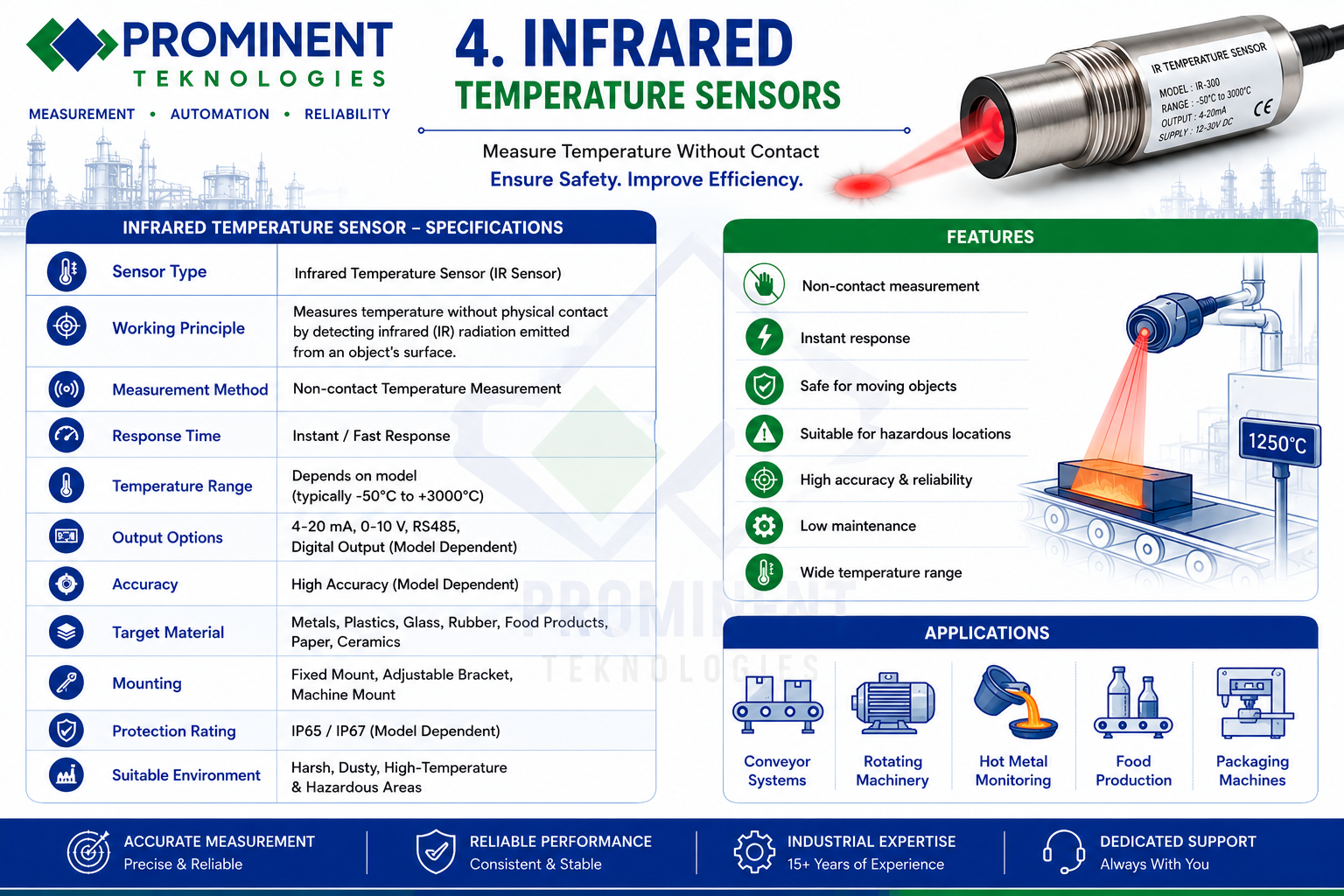
4. Infrared Temperature Sensors
5. Temperature Transmitters
Temperature transmitters convert RTD or Thermocouple signals into standard industrial outputs.
Features :
1. 4–20 mA output
2. HART communication
3. High accuracy
4. Remote transmission
5. Noise immunity
Applications
1. PLC systems
2. DCS
3. SCADA
4. Process automation
5. Industrial monitoring