
Electromagnetic vs Ultrasonic Flow Meter comparison for industrial automation and process control systems, including working principle and applications.
Flow meters play a major role in industrial automation and process control systems.

Prominent Teknologies is dealing in a wide range of industrial flow measurement solutions, including Electromagnetic Flow Meters and Ultrasonic Flow Meters for various process applications.
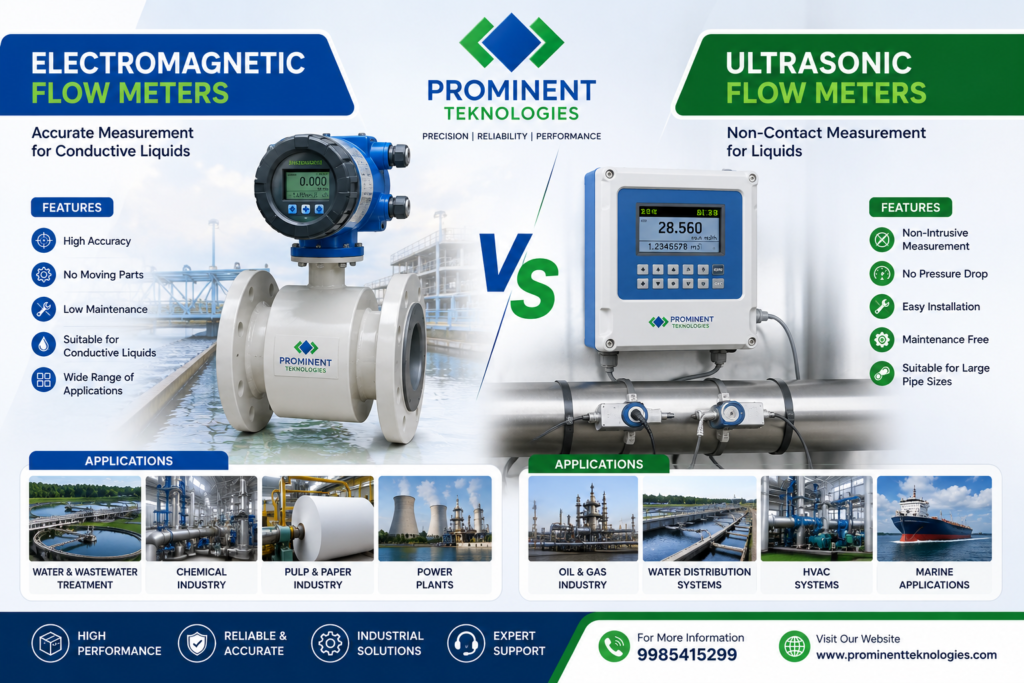
Among the most commonly used technologies are Electromagnetic Flow Meters and Ultrasonic Flow Meters. Both are widely used for measuring liquid flow, but their working principles, applications, and advantages are different.
Electromagnetic vs Ultrasonic Flow Meter
What is an Electromagnetic Flow Meter?
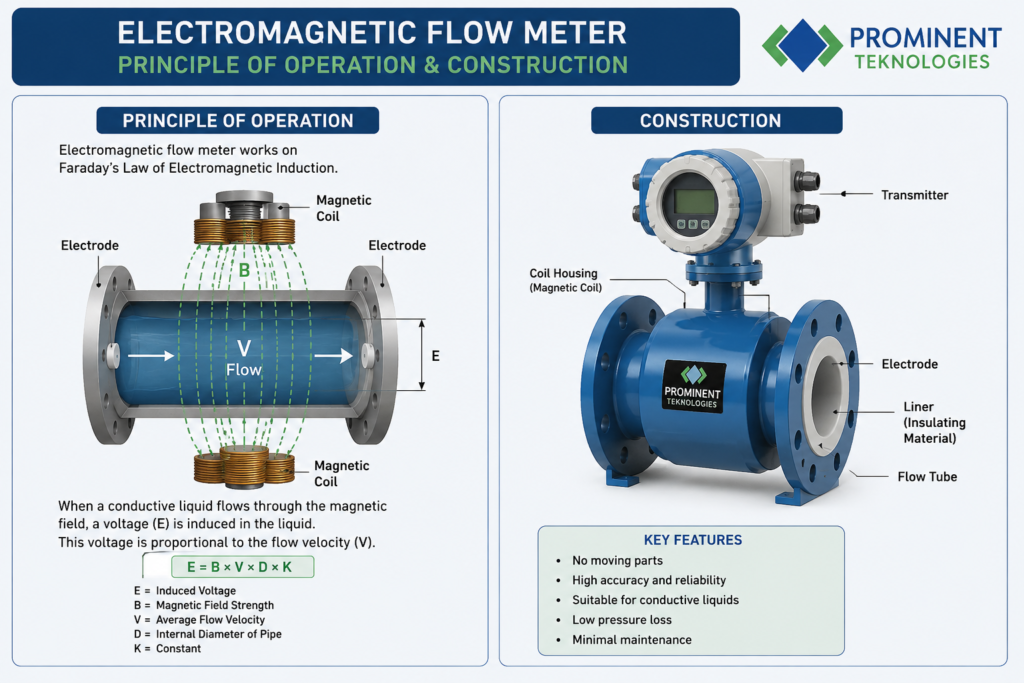
An Electromagnetic Flow Meter, also known as a Mag Flow Meter, works based on Faraday’s Law of Electromagnetic Induction. It measures the flow of conductive liquids by generating a magnetic field inside the pipe.
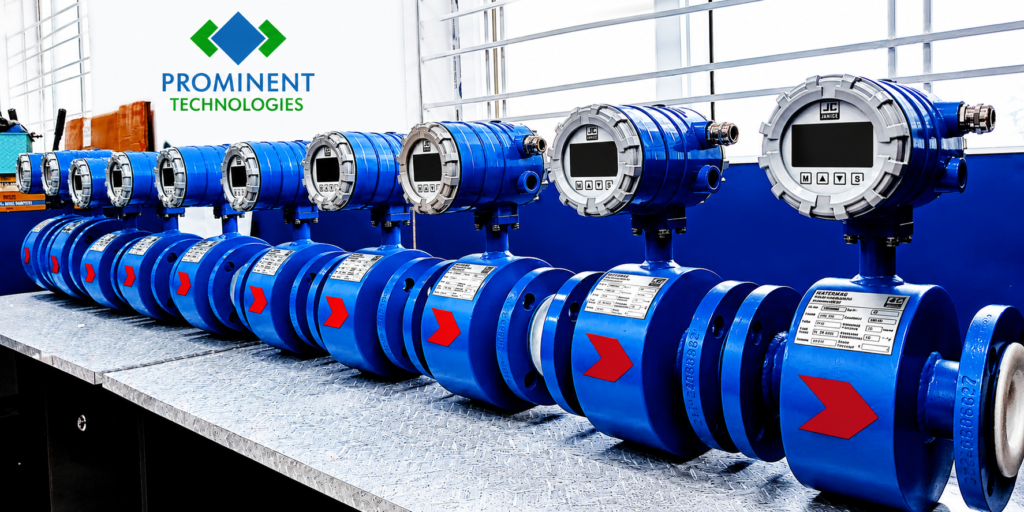
These flow meters are highly accurate and suitable for applications involving:
- Water treatment plants
- Chemical industries
- Slurry handling
- Wastewater systems
- Food and beverage industries
Advantages of Electromagnetic Flow Meters
- High measurement accuracy
- No moving parts
- Low maintenance
- Suitable for dirty and conductive liquids
- No pressure loss
However, electromagnetic flow meters work only with conductive liquids and are not suitable for oils or gases.
What is an Ultrasonic Flow Meter?
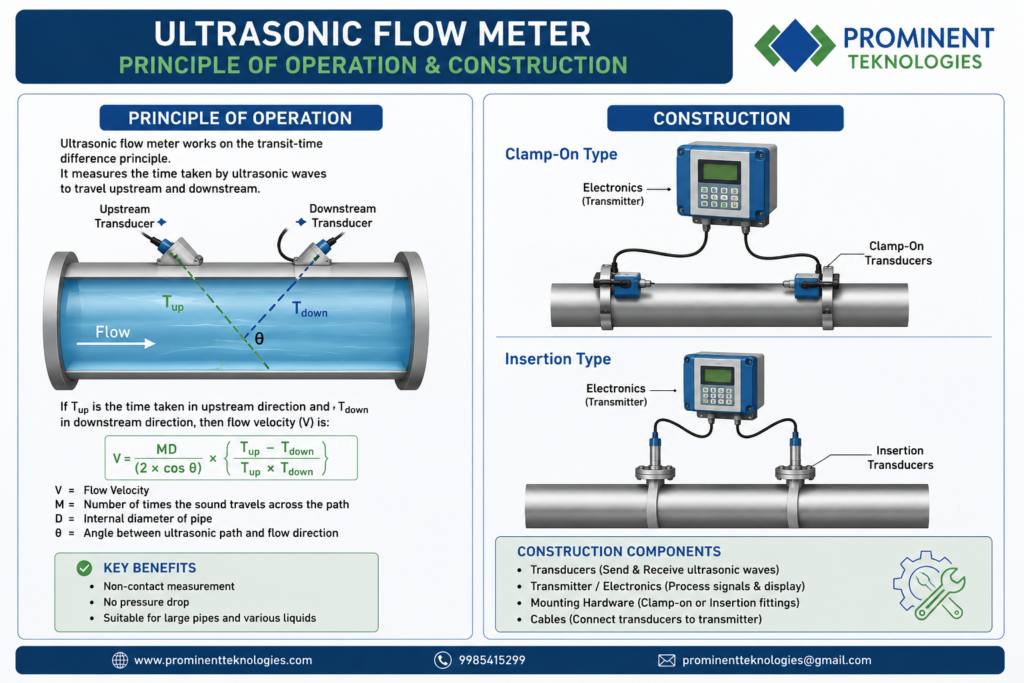
Ultrasonic Flow Meters use ultrasonic sound waves to measure flow velocity inside the pipe. These meters are available in clamp-on models, allowing measurement without cutting the pipeline.
They are commonly used in:
- HVAC systems
- Water distribution
- Energy monitoring
- Temporary flow measurement
- Large pipelines
Advantages of Ultrasonic Flow Meters
- Non-invasive installation
- No pipe cutting required
- Easy maintenance
- Portable models available
- Suitable for large pipe sizes
Ultrasonic flow meters are ideal where shutdown is not possible or where non-contact flow measurement is preferred.

Which One is Better (Electromagnetic vs Ultrasonic Flow Meter)?
The selection mainly depends on the application.
Choose Electromagnetic Flow Meter if:
- The liquid is conductive
- Permanent installation is required
- High accuracy is important
- The application involves slurry or wastewater
Choose Ultrasonic Flow Meter if:
- Non-contact measurement is needed
- Pipe cutting is not allowed
- Portable measurement is required
- The pipeline is very large
Knowledge Bite: Electromagnetic Flow Meter vs Ultrasonic Flow Meter
| Point | Electromagnetic Flow Meter | Ultrasonic Flow Meter |
|---|---|---|
| Working Principle | Magnetic field and voltage signal | Ultrasonic sound waves |
| Suitable For | Conductive liquids | Clean liquids, water, chemicals |
| Pipe Cutting | Usually required | Clamp-on type may not require cutting |
| Pressure Drop | No pressure drop | No pressure drop |
| Best Use | Water, wastewater, slurry, chemicals | Water, oil, chilled water, HVAC |
| Limitation | Not suitable for non-conductive fluids | Accuracy affected by bubbles/solids |
Conclusion (Electromagnetic vs Ultrasonic Flow Meter)
Both electromagnetic and ultrasonic flow meters offer reliable flow measurement solutions for industrial applications. Electromagnetic flow meters are best for conductive liquids and permanent installations, while ultrasonic flow meters are preferred for easy installation and non-invasive measurement.
Choosing the right flow meter depends on factors such as liquid type, installation conditions, maintenance requirements, and industrial application needs.
📞 Contact: 9985415299
📧 prominentteknologies@gmail.com
🏢 Prominent Teknologies